Wall insulation in Bismarck ND - walls packed full so cold rooms stay warm
Cold, drafty rooms in an older house usually mean thin or empty walls. We fill them tight so the heat stays inside.
- Licensed and fully insured.
- Free in-person estimates.
- We respond within 1 business day.
How do you add insulation to walls that are already closed up?
Wall insulation in Bismarck usually means blown-in fill, loose insulation blown through a hose, packed into the hollow spaces of the walls you already have, so a cold room holds heat without tearing the walls out. It works its way around wiring, pipes and odd-shaped framing, and when it's packed tight enough it also slows the air moving inside the wall.
If you're reading this, you probably have a room that stays cold no matter where the thermostat sits, and you'd like to fix it without gutting the house. What moves the price is how much wall we're filling, what your siding is, and whether we work from inside or outside, because that decides how much siding work or patching comes with it. The schedule mostly turns on whether the city wants a permit for your job and how much prep your walls need, and the written estimate I send after looking at your house spells out what we'd do and why.
Does your house need wall insulation?
Older house, hollow walls
Many older homes were built with little or nothing in the walls, so heat walks straight out.
Cold room over garage
Rooms over a garage lose heat through walls and floor, so their walls are worth a look.
Walls cold to touch
An outside wall that feels cold in winter is usually telling you the cavity is thin or empty.
Siding or remodel planned
If new siding or a remodel is already planned, filling the walls then saves opening them twice.
How we do wall insulation
First I look the walls over with you and check what's already in them, because some have a little old fill, some have nothing, and some have wiring or blocking that changes where we open up. Existing walls can be filled from inside or outside, so I walk you through what each one means for your siding or your drywall before you pick. Then we seal the gaps we can reach, open each space between the studs, and pack every cavity tight so the fill is less likely to settle and leave empty spots, and we close everything back up when it's full.
Walls are rarely the only place a house leaks. Air slips in around outlets, pipes and where the walls meet the floor, which is why air sealing, closing those gaps before we insulate, usually comes first. Walls below ground get their own plan through basement insulation, so if the basement is part of the cold, we look at it on the same visit.
Filled from outside
This suits houses where the inside walls are finished the way you like them, since the work happens behind the siding and your rooms stay untouched. It works best when the siding comes off and goes back on cleanly.
Filled from inside
This suits houses with siding that's old, brittle or hard to take off, because the work is small holes in the drywall or plaster that get patched afterward. Plan on some touch-up paint once we're done.
Spray foam in open walls
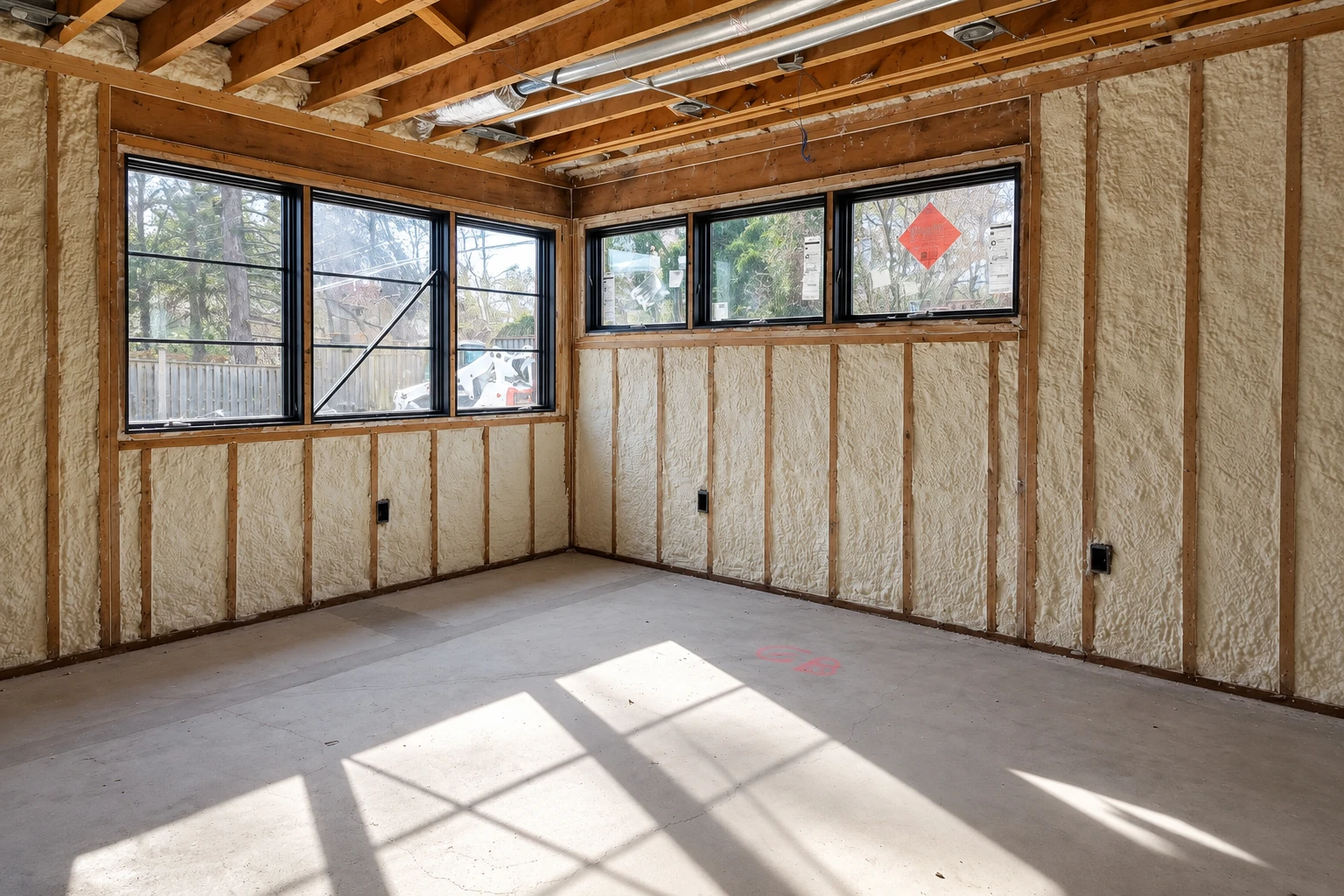
When a remodel or addition has the studs bare, spray foam is an option, and it costs more because it seals air while it insulates. For closed walls that are only drafty, sealing the gaps and packing them full usually gets you more for the money.
What happens when you call about wall insulation in Bismarck?
Call or send the form
Tell us which rooms run cold and a little about the house, and we'll set a time for me to come out. We're open 7 AM to 11 PM every day, so evenings and weekends work.
Walk the house together
I check the walls with you, take photos and explain what I found, what should be fixed first and what can wait. Then I send a written estimate that says what we'd do and why, so you know the cost before anything starts.
Fix, seal, then fill
If the city wants a permit, we wait until it's issued, then we take care of any problems we found, seal the gaps and pack the walls. Outside, the siding goes back on, and inside, the holes get patched.
Walk through the finished walls
Before we pack up, I go over what we did, show you the patched or reset areas and answer whatever's still on your mind.
Wall insulation or the attic first?
Usually the attic, unless the walls are empty.
In most houses I look at, the attic is the easier fix and the one you feel first, because warm air rises and a thin attic lets it go. Walls take more work to fill since they're closed up, so I usually put them second unless they're the obvious problem.
That changes when the walls are hollow or one room never warms up while the attic is already in good shape. Then the walls go to the top of the list. Either way, the written estimate spells out what I'd do first and what can wait, so you can do it in stages if that suits your budget.
Examples of insulation work
Look through these examples of insulation work, from walls and attics to crawl spaces, to get a feel for what each kind of job involves.
Get a written estimate for your walls
Tell us your siding type, whether any walls are masonry or below ground, and a rough wall area in square feet. We respond within 1 business day to set up a free in-person estimate, with no pressure to book.
Why Bismarck homeowners call Pinnacle Bismarck Spray Foam Insulation for their walls
I do every estimate myself
When you call, I'm the one who comes out, and I'm on the job alongside our installers once work starts. What I tell you at the estimate is what happens in your walls.
I'll tell you if they're fine
I'd rather tell you your walls don't need anything than sell you insulation you won't notice. If the cold is coming from somewhere else, like the attic or a leaky window, I'll say so.
Licensed and fully insured
We're licensed and fully insured. North Dakota requires a state contractor license on any job costing more than $4,000, and that covers subcontractors and out-of-state crews too, so it's fair to ask whether everyone working on your walls is licensed.
In business since 2023
I learned how houses lose heat by reading everything I could find, then picked up the hands-on side one attic and crawl space at a time. If your walls are the question, call (701) 299-5007 or send the form above.
Questions about insulating your walls
What is the best way to add insulation to existing walls, from inside or outside?
Both work, and the right one usually depends on whether you'd rather deal with your siding or your drywall. From outside, siding comes off where it's needed, and vinyl, aluminum and steel usually loosen with a siding tool. From inside, the access holes get patched or covered with chair rail molding, and Department of Energy guidance has the crew protect the floor and put up containment so dust doesn't spread through the house.
How much does blown-in wall insulation cost per square foot?
Installed blown-in wall insulation usually runs about $4 to $4.50 per square foot across the US. That's a national figure for the market, not our price, and your number moves with the things covered above, like your siding and how much patching your walls need. The written estimate gives you the figure for your house.
How long does blown-in cellulose insulation last in walls?
Properly installed cellulose can work well for decades, according to the cellulose makers' trade group. That puts most of the weight on how the job is done rather than on the material itself, so ask any crew how they make sure every cavity ends up full.
Can blown-in cellulose go in brick walls or basement walls?
It's not recommended there. The cellulose makers' trade group advises against cellulose for walls below ground level and for filling the hollow spaces in masonry walls. If part of your house is brick, block or below ground, tell me at the estimate and we'll talk through what fits those walls instead.
How do I keep moisture from building up inside insulated walls?
Keep indoor humidity below 40% whenever it's under 32° F outside, which is the cellulose makers' trade group's advice and the simplest part you control. For walls in cold climates, Building America guidance also calls for a vapor retarder, a layer that slows moisture, behind the drywall, and that's easiest to add while the walls are open.
How do I tell if my walls already have insulation in them?
Turn off the breaker for an outlet on an outside wall, take the cover off and shine a flashlight into the gap beside the box to see whether there's fill, nothing or a thin layer. One outlet only tells you about that spot, so at the estimate I check several walls and show you the photos.
Wondering what's inside your walls?
I'll come look the walls over with you and send a written estimate that says what we'd do and why.
Work that often goes with walls
Wall insulation rules and houses in Bismarck
The city's building inspection office answers permit questions, and its permit list names additions, renovations, remodels and basement finishes but not wall insulation on its own, so the list doesn't settle whether your job needs one. Before work starts, we check with that office, and when a permit is needed we handle the application and wait until it's issued. The codes are worth a question too, since the city's code list names an earlier energy code than the new state building code that took effect this year, so ask me which one applies to your project and I'll check it with the city rather than guess.
On wall jobs here we see plenty of older houses with hollow walls behind lap siding or plaster, and newer ones where a finished room ended up with less in its walls than the rest of the house. We run into the same mix in Mandan and across Bismarck, so the first visit starts with finding out which kind of wall you have.