Basement insulation in Bismarck ND - warmer walls without trapped moisture
Cold floors and a chilly, damp basement? We check the foundation and moisture first, then insulate the walls so the space stays warmer and drier.
- Licensed and fully insured.
- Free in-person estimates.
- We respond within 1 business day.
How do you insulate a basement in Bismarck without trapping moisture?
Basement insulation adds a layer to your foundation walls, usually from the inside, so a Bismarck basement holds its heat better and the walls deal with moisture instead of trapping it.
At Pinnacle Bismarck Spray Foam Insulation, most basement calls start with cold floors upstairs or a homeowner about to frame and drywall the space. The price moves with how much wall there is, whether it's bare concrete or already finished, which material fits the dampness down there and whether the rim joists, the wood band sitting on top of the foundation, get insulated and air sealed too. The schedule mostly turns on what has to happen first, like a foundation repair or a permit, and the written estimate I send after looking at your basement says what we'd do and why.
Is basement insulation the right move for your house?
Finishing the basement soon
Insulating before the studs and drywall go up means the walls get done right the first time.
Cold floors upstairs
Bare foundation walls pull heat out of the basement, and the floors above you feel it first.
Furnace and ducts below
When your heating equipment lives down there, a warmer basement keeps more of that heat in the house.
Chilly, clammy basement
The right insulation helps the walls stay drier, once any water actually coming in is dealt with.
How we handle basement insulation
Moisture decides most of a basement job, so I look at the foundation and any dampness before we pick a material. Once any problems are dealt with, we seal the gaps where pipes, wires and framing meet the concrete, insulate the walls and rim joists, and plan the fire-rated covering from the first visit, because spray foam has to be covered with ignition-barrier paint or drywall and most building codes want a fire-rated covering on foam board inside a house too. That covering is in the estimate from the start, so it doesn't show up as an extra at the end.
The material comes down to how damp the walls are and what you plan to do with the space. National guidance ranks closed-cell foam insulation best for moisture control of anything used inside foundation walls, and it blocks air well. Open-cell foam insulation blocks air too, but it has to go on thicker to protect against moisture, which means more material on the job.
Spray foam on the concrete
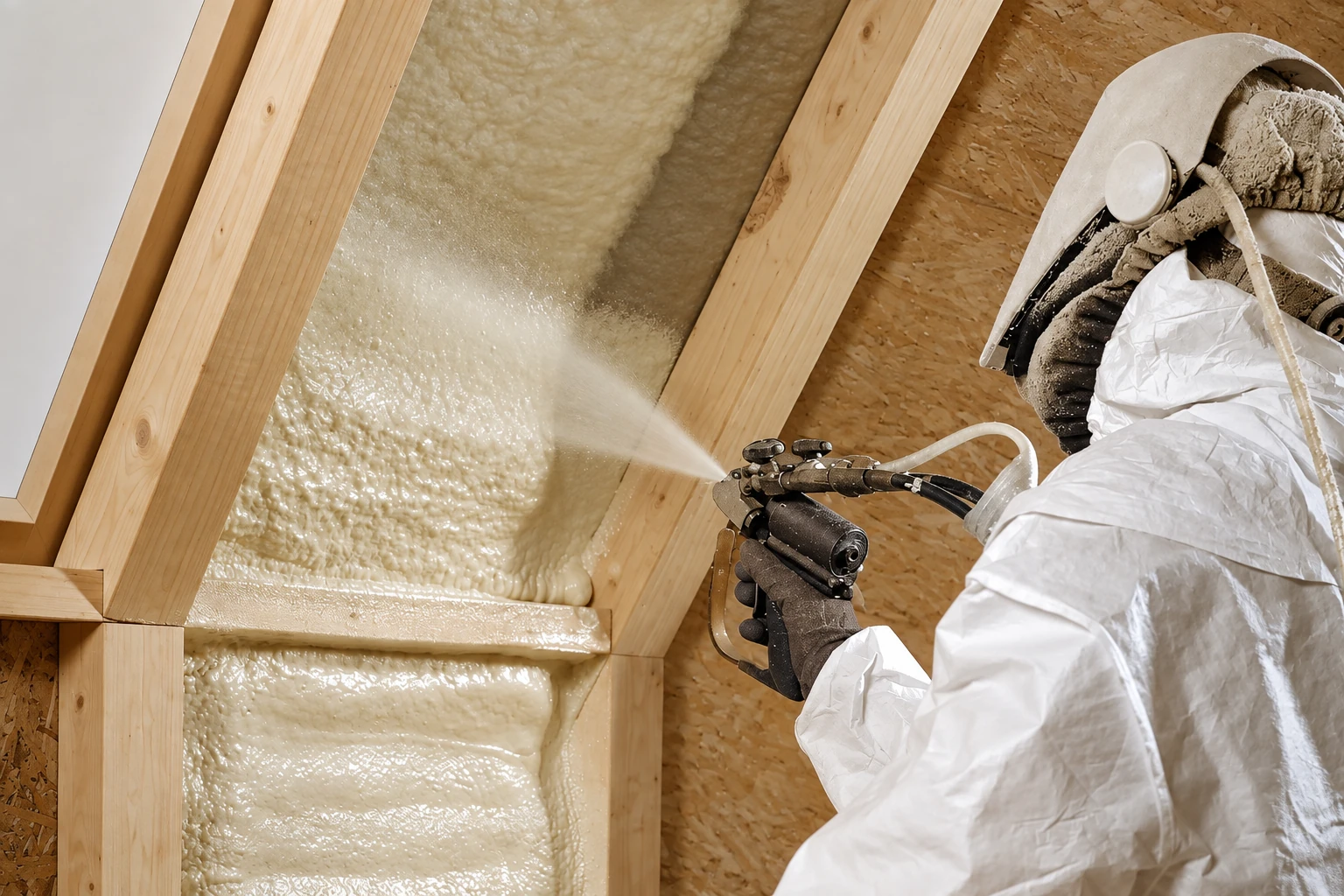
This suits an open, unfinished basement because the foam fills every bump in the wall and seals air in the same pass. You'll still want drywall over it later, or ignition-barrier paint if the walls stay open.
Foam board glued tight
Rigid foam board suits flat, even walls, because for moisture control the panels have to stick fully to the concrete with no air gap behind them. The edges and seams have to be sealed tight too, or damp air works its way around the boards.
Foam, then a framed wall
This is the usual route when you're finishing the basement, because the foam handles the concrete and the studs in front give you room for wiring and drywall. It's the layout most finished basements end up with.
Insulation on the outside
National guidance says insulating the outside of the foundation controls moisture and, in very cold regions, protects the foundation from freeze-thaw. It suits homes without termite problems and needs careful moisture protection while it goes in, so it usually only makes sense when the outside is already dug open.
What happens after you call about your basement?
Call or send the form
We get back to you and set a time for me to come out. It helps if you can tell us whether the basement is finished and about any cracks or dampness you've noticed.
I look the basement over
I walk the space with you, take photos and explain what I found, what should be fixed first and what can wait. Then I send a written estimate that says what we'd do and why, so you can weigh the price against the reasons.
We fix problems, then seal
On the job we handle any problems first and seal the gaps before any insulation goes on. The fire-rated covering goes on as part of the same job.
Walk through the finished work
Before we pack up, I walk you through the finished basement and show you what we did. If anything looks off to you, that's the time to say so.
Foundation problems before basement insulation
Fix the foundation first, then insulate.
Adding insulation over a foundation with structural problems can hide them and sometimes make them worse. So if I see a wall that's bowing, cracks that look like they're moving or water coming through, I'll tell you that's a job for a foundation contractor before we cover anything.
I know that can feel like a delay when you're ready to finish the space. But once foam and drywall are on, nobody can see that wall anymore, and I'd rather you pay for the repair now than pay to tear out insulation later.
Examples of insulation work
Look through these examples of insulation work in different parts of a house to get a feel for how each material goes in and finishes out.
Get a written plan for your basement
Tell us if your basement is finished and about any cracks or dampness, and we'll get back to you within one business day. I'll come out for a free look and written estimate, with no pressure to book.
Why Bismarck homeowners call us about their basements
I do every estimate myself
I come out to look at your basement, and I'm on the job alongside our installers. The person who explained the plan is there when the walls get done.
Photos before we touch anything
We're best known for showing you what's going on in your basement before any work starts, with photos and a plain explanation. If your walls don't need more insulation, I'll tell you that instead of selling it.
Licensed and fully insured
We're licensed and fully insured. That's worth confirming with anyone working on your foundation walls, since that's the part of the house you'll live with longest.
Based in Bismarck since 2023
I started this business in Bismarck in 2023 after teaching myself how houses lose heat and learning the hands-on side one crawl space at a time. If you want that kind of look at your basement, call (701) 299-5007 or send us the form.
Basement insulation questions
How much does basement insulation cost in Bismarck?
Across the US, basement insulation usually costs about $1,500 to $6,500 per job, and that's a national range, not our price. Where your job lands depends on how much wall there is, which material fits the moisture, whether foundation work comes first and the fire covering foam needs. My written estimate gives you the price for your basement along with what we'd do and why.
Can fiberglass batts go directly against a concrete basement wall?
No, national guidance keeps fiberglass batts and cellulose from touching foundation walls. Concrete stays cool and can carry dampness, and batts pressed against it can hold that moisture right where you can't see it. If you want batts in a framed wall, there's usually foam against the concrete first.
Can I put plastic sheeting behind the drywall in my basement?
Usually not, because plastic sheeting or foil-faced sheathing over fiberglass in a basement wall can trap moisture inside the wall, and the guidance leaves them out. The suggested choice is kraft-faced batts, the kind with a paper backing, or latex paint on the drywall. If a finish plan calls for plastic, it's worth asking why.
Who needs a contractor license in North Dakota for insulation work?
When a job's cost, value or price is over $4,000, North Dakota requires the person doing the work to be licensed as a contractor. That includes subcontractors and contractors from out of state. Ask to see the license before anyone starts on your basement.
What is the best way to insulate a rim joist in a basement?
There are two common ways, rigid foam cut to fit each section with caulk or spray foam around the edges, or spray foam that air-seals and insulates in one step. The rim joist is easy to skip on a basement job, so ask which method a quote includes.
How long does basement insulation take?
The insulating itself is usually the quicker part, and most of the schedule depends on what has to happen before it. Foundation repairs, a permit if the city wants one and the fire covering over foam all add steps, and I lay out that order in your written estimate.
Want a look at your basement?
I'll come out, look the space over with you and send a written estimate saying what we'd do and why.
Work that often goes with it
Basement insulation permits and radon in Bismarck
Bismarck requires permits for the projects on its permit list, and that list names basement finishes and remodels but doesn't mention insulation on its own, so it doesn't settle whether an insulation-only job needs one. Questions go to the city's Building Inspection Division. Before work starts, we check with that office on your job, and when it calls for a permit, we handle the application and wait until it's issued before we begin.
Radon is worth settling before the walls get covered, because the state's environmental quality office passes along the advice that every home below the third floor be tested, and since you can't see or smell it, a simple test is the only way to know. We're based in Bismarck and work in Mandan and other cities around it, and the order of moisture first, then insulation, holds on basements in Bismarck and Mandan alike.