Blown-in insulation in Bismarck ND - attic coverage that stays even out to the edges
Cold upstairs rooms and a climbing winter power bill usually start in the attic. We seal the gaps, then blow it full and even.
- Licensed and fully insured.
- Free in-person estimates.
- We respond within 1 business day.
How does blown-in insulation work in a Bismarck attic?
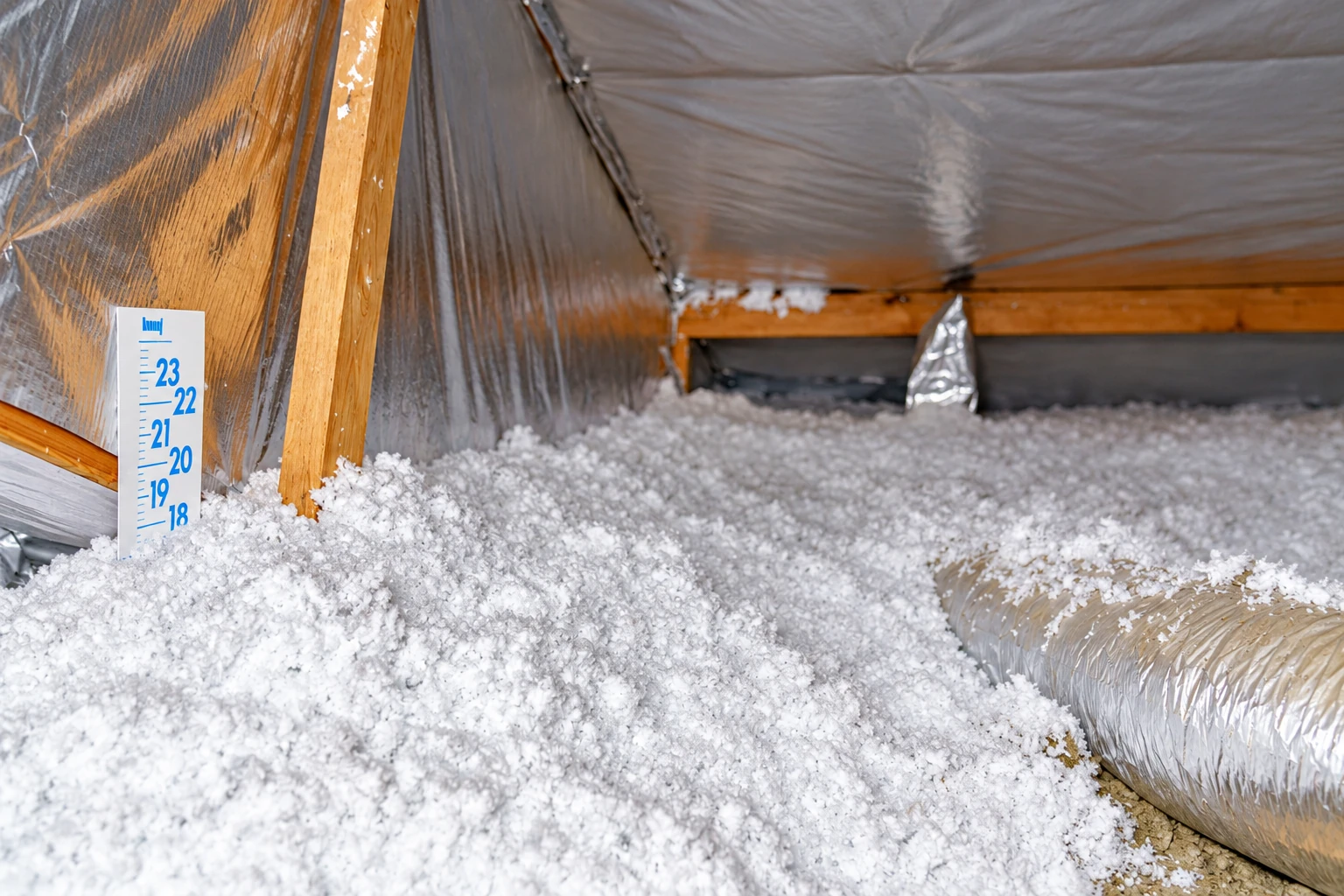
Blown-in insulation is loose fill blown through a hose onto your attic floor after the gaps are sealed, and in Bismarck it's how we bring a thin or patchy attic up to a full, even layer that slows the heat leaving your house. It's very good at filling odd-shaped spaces and the hard-to-reach spots around pipes, wires and framing.
Most calls start with an upstairs that won't stay warm or a power bill that jumps every January. The price mostly turns on how big the attic is, how many inches are already up there, how much sealing it needs and whether something has to be fixed before any insulation goes in. The schedule turns on those same fixes and on how easy your attic is to get into, so I spell all of it out in a written estimate that says what we'd do and why.
Is blown-in insulation right for your attic?
Upstairs runs cold
Bedrooms under the attic feel drafty all winter while the main floor stays comfortable enough.
Power bill keeps climbing
The furnace runs hard every winter and the bill shows it, even when nothing else changed.
Joists showing through
If you can see the tops of the ceiling joists, there isn't much insulation left up there.
Older house, thin attic
Houses that went years without a top-up often have only a few matted inches left overhead.
How we install blown-in insulation
Once the problems from the estimate are handled, we seal the gaps around can lights, pipes and the attic hatch. Then we set baffles, short chutes at the eaves, so the fill can't spill into the soffits and bury the vents your attic needs to breathe. Blown-in only does its job if it's spread evenly and packed dense enough to stay put, so we fill right out to the edges of the ceiling instead of piling it deep in the middle and thin at the sides, which is the mistake I see most. I'll tell you the material and depth we're planning before we start, so you can hold any other quote up against it.
The attic is often just one piece of a cold house. If the drafts go past the attic, we can look at the whole picture with home insulation, and attic air sealing is the step that goes in right before the fill. When what's up there now is soaked or full of droppings, blowing fresh material over it just buries the problem, so that attic starts with insulation removal instead.
Topping up what's there
When your existing insulation is dry and clean, we seal and then blow fresh fill over it to bring the whole ceiling up to an even depth. It's usually the simplest way to fix an attic that's thin but otherwise sound.
An attic with little or nothing in it
Some attics have almost nothing left, or never had much to begin with. We seal, set the baffles and blow a full layer from scratch, so the coverage is even from the first pass.
Tight or awkward attics
Low rooflines, crowded framing and small hatches make other insulation hard to place well. A hose reaches the far corners and fills around obstructions that would leave gaps otherwise.
What happens when you call about blown-in insulation in Bismarck?
Call or send the form
You call (701) 299-5007 or send the form, and we get back to you to find a time for me to come out. Tell us what you've noticed, like cold rooms or wet spots, so I know what to look for.
I look over the attic
I go through the space with you, take photos and explain what I found, what should be fixed first and what can wait. Then I send a written estimate that says what we'd do and why, so you know what you'd be paying for before you decide anything.
We fix and seal first
On the job we handle the problems first and seal before we insulate, so nothing gets buried that shouldn't be. Then the baffles go in and the fill gets blown.
Walk through the finished attic
Before we pack up, I walk you through the finished work and show you the depth across the attic. You'll see the vents are clear and the edges are covered, not just the middle.
Should you air seal before blown-in insulation?
Yes. Seal first, then blow the insulation.
Loose fill slows heat moving through it, but warm air still slips through the gaps around lights, plumbing, wiring and the hatch, carrying heat and moisture straight into the attic. Blown-in is meant to go on after air sealing for that reason, because an unsealed attic leaves the new layer fighting a draft all winter.
Sealing takes time and adds to the quote, but it decides how well everything on top of it works. So we don't skip it to make a price look lower, and if a quote you're comparing doesn't mention sealing, it's worth asking why.
Examples of insulation work
Take a look through these examples of insulation work, from blown-in attics to sealed crawl spaces, to get a feel for what the work looks like.
Get a free look at your attic insulation
Tell us your home's age, how many inches are up there now and any signs of moisture or vermiculite, and we'll respond within 1 business day. Then I set up a free in-person estimate, with no pressure to book.
Why Bismarck homeowners call Pinnacle Bismarck Spray Foam Insulation for blown-in insulation
I do every estimate myself
The person who looks at your attic is me, and I'm on the job alongside our installers when the work gets done. You get the same answers before and during the job from someone who's actually seen the space.
You see it before we start
We're best known for showing you what's going on in your house before we touch anything, and I'll tell you plainly when your insulation is already fine. We've worked that way since I started the business in 2023.
Licensed and fully insured
North Dakota requires a contractor license when a job's price runs over $4,000. We're licensed and fully insured, so you don't have to wonder about it on a bigger attic.
Talk it over first
Call (701) 299-5007 or send the form with whatever you've noticed upstairs. I'll come take a look and tell you whether blown-in is the right fix for your house.
Blown-in insulation questions
Is blown-in insulation cheaper than batts?
Usually, yes. Blowing loose fill into an attic generally costs less than laying batts and gives better coverage, though installation costs vary from house to house. For most attics that makes blown-in the lower-cost way to get the whole ceiling covered.
How deep should blown-in insulation be in a Bismarck attic?
NDSU Extension recommends about 16 to 20 inches of loose-fill cellulose or fiberglass in an attic. If a quote you're looking at doesn't name a depth, ask for one. You can check what you have now with a ruler at a few spots away from the hatch, and the difference tells you roughly how much you'd be adding.
What should be fixed before blowing insulation into an attic?
ENERGY STAR recommends a professional fix these first: fans venting moist air into the attic, knob and tube wiring from before 1930, wet insulation from a roof leak, and moldy or rotted rafters or joists. Old knob and tube wiring can be a fire hazard when insulation touches it. I point these out at the estimate, and when one needs an electrician or a roofer, I'll tell you so.
How do I know if the vermiculite in my attic is safe?
An approved lab test tells you, and ENERGY STAR advises leaving vermiculite undisturbed until that test shows it has no asbestos. It's lightweight, pea-size and flaky gray, and it may contain asbestos, so testing comes before any new work. We don't blow anything over it until the results are back.
How much does blown-in insulation cost in Bismarck?
Attic insulation in Bismarck usually costs about $1,400 to $4,700 per job, and that's the going rate for attic jobs around here, not our own price. Your number comes from the written estimate, which lists what we'd do and why. The work is backed by our satisfaction guarantee.
What causes ice dams on Bismarck roofs?
Heat escaping into the attic warms the roof deck and melts snow, and ice dams can form with as little as 2 inches of snow up there. A sealed, properly insulated attic can help prevent them. That's why we treat sealing and blowing insulation as one job.
Want a second look at your attic?
I'll come out, look the space over with you and send a written estimate that says what we'd do and why.
Related insulation services
Blown-in insulation in Bismarck: permits and winters
The city's Building Inspections Department handles permits in Bismarck and in the area just beyond city limits that it also oversees, and beginning construction without a permit is prohibited. The city's information doesn't settle whether a blown-in attic job needs one, so before work starts we check with the building inspection office. When it does, we handle the application and wait for the permit to be issued before we begin.
Our winters are the other thing that shapes the job. NDSU Extension advises that in northern climates a vapor retarder on the warm side of the insulation is important, because it keeps moisture from working into the fill and cutting how well it works, which is why I look at the ceiling side and not just the fill. We're based in Bismarck and work in Mandan and other cities around it, and on jobs in Bismarck and Mandan we see the same mix of older attics down to a few inches and newer ones that were never filled out to the edges.