
Closed-cell foam insulation in Bismarck ND - a thin, dense layer that keeps drafts out
Cold basement walls or drafty spots along the foundation? We seal and insulate in one layer, after any water problem is fixed.
- Licensed and fully insured.
- Free in-person estimates.
- We respond within 1 business day.
When does closed-cell foam make sense in a Bismarck house?
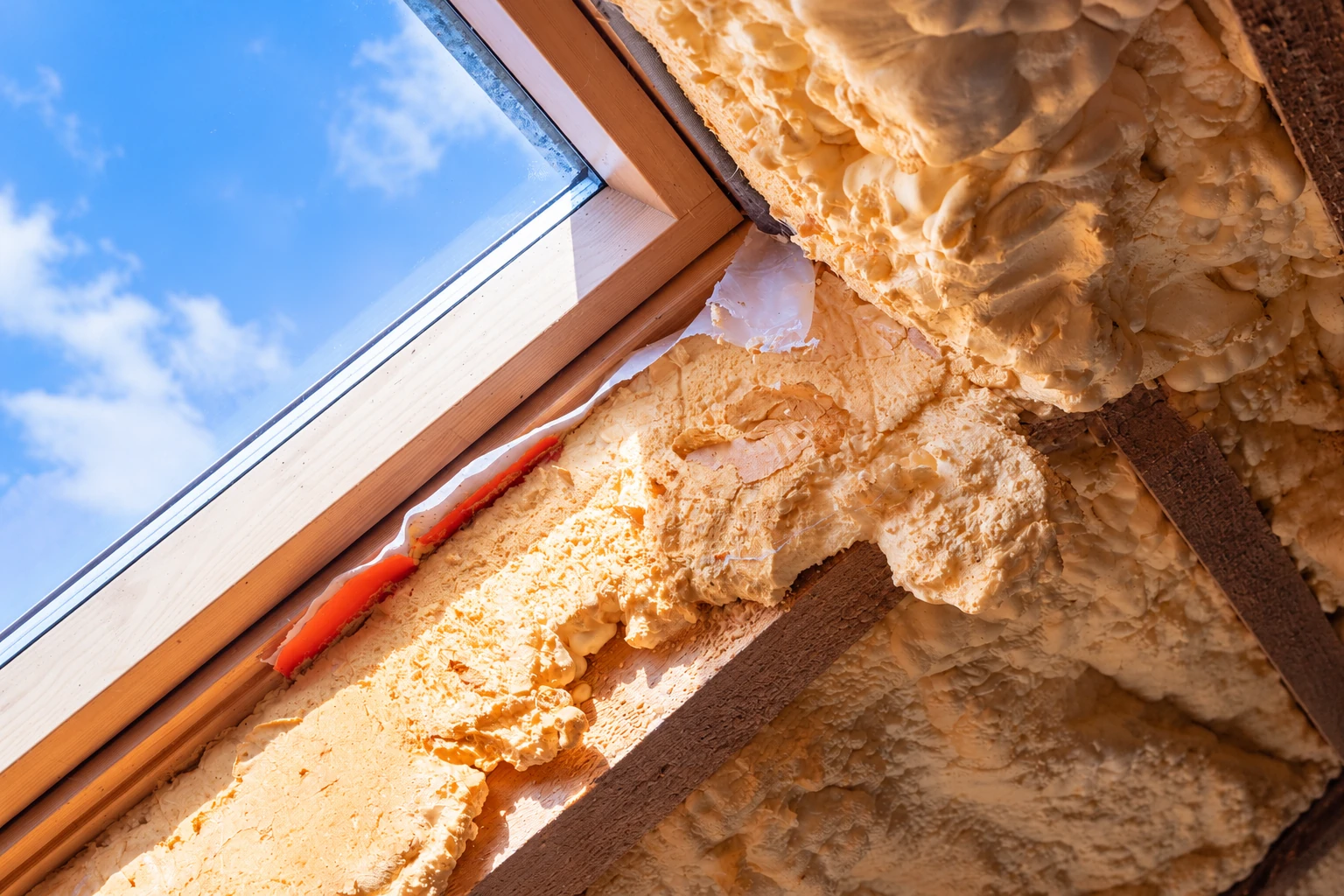
Closed-cell foam insulation is a dense spray foam that sets hard, packs a lot of insulating value into each inch and, at its usual thickness, slows moisture moving through the wall, which makes it a good fit for basements, crawl spaces and tight spots in Bismarck homes.
Most people call us because the basement is cold, the floor over the garage is chilly or the power bill keeps climbing, and closed-cell foam is one answer to that, not the answer for every house. At Pinnacle Bismarck Spray Foam Insulation I start by showing you what's going on, often along the rim joist, the band of wood resting on top of your foundation wall, where outside air slips straight in. The price moves with how much area we cover, how thick the foam goes, how easy the space is to reach and whether old insulation or a water problem has to be dealt with first, and the schedule turns on those repairs, any permit review and the time your household spends away from home. If the whole basement needs attention, our basement insulation page goes further, and my written estimate tells you what I'd do and why.
Is closed-cell foam right for your home?
Drafty rim joists
Air sneaks in along the rim joist, and foam seals and insulates it in one pass.
Basement walls you'll finish
Foam on bare concrete gives you a moisture-slowing layer before studs and drywall go up.
Tight spaces, little depth
Shallow walls or a cathedral ceiling need the most insulating value from the thinnest layer.
Cold floor over the garage
Sealing and insulating the garage ceiling stops the draft that chills the room above it.
How we do closed-cell foam insulation
Closed-cell suits the spots where you want a lot of insulating value in a thin layer that also holds back moisture, so I plan the job around those spots instead of the whole house. If water is getting in, that gets fixed before we spray, because foam over a wet wall just hides the problem. When we plan, I also ask whether anyone at home has asthma or allergies, since that can change whether foam is the right pick. On the day, we cover the floor and anything we aren't spraying, check that the surfaces are dry and clean, spray the foam in passes to the depth we agreed on, trim it back and clean up.
Closed-cell isn't always the better foam. In a deep cavity where moisture isn't the worry, open-cell foam insulation stops air with a softer, thicker layer, and I'll tell you when that's the better fit. Business owners call us too, and our commercial insulation work covers shops, offices and other buildings where closed-cell often goes on walls and roof decks.
Rim joists
This suits almost any house with a basement or crawl space, because the rim is where cold air leaks in most and a thin layer of foam closes it off.
Foundation and crawl space walls
This suits a basement you plan to finish or a crawl space you want warmer, because the foam stays put against concrete and doesn't soak up water once the leaks are fixed.
Thin walls and ceilings
This suits shallow framing like a cathedral ceiling or the ceiling over a garage, where there isn't room for a thick layer and every inch has to work hard.
What happens when you call about closed-cell foam in Bismarck?
Call or send the form
You call (701) 299-5007 or fill out the form, and we get back to you to set a time for me to come out. Tell us then if you've seen water in the basement.
I look the space over
I go through the basement, crawl space or attic with you, take photos and show you what I found. You'll hear what should be fixed first and what can wait.
You get a written estimate
The estimate says what we'd do and why, so you can weigh it on your own time without anyone pushing. If you go ahead, we check with the city's building inspection office about a permit, and since review times vary, we leave room for that before setting a start date.
We spray, then walk through
We handle problems first, seal before we insulate, and your household stays out during spraying and for the time afterward that the safety guidance calls for. Before we pack up, I walk you through the finished work.
Closed-cell foam or sealing and loose fill?
In most attics, sealing and topping up wins.
Closed-cell foam costs more than loose fill, but it seals air while it insulates, which is why people ask about it for the attic. In most attics, sealing the gaps around can lights, pipes and the hatch, then topping up the blown-in insulation, loose fill blown through a hose, gets you most of the way for less money.
The exception is ductwork. If your furnace ducts run through the attic, foam on the underside of the roof brings them inside the warm part of the house, and that's when I'd recommend it. Either way, I'll tell you if what's already up there is fine.
Examples of insulation work
Look through these examples of insulation work, from spray foam on walls and rim joists to blown-in attics, to picture what different jobs look like.
Get a written estimate for closed-cell foam
Tell us what you want insulated, any basement water and any asthma or allergies at home. We get back to you within one business day to set up a free on-site look, with no pressure to book.
Why Bismarck homeowners call Pinnacle Bismarck Spray Foam Insulation for closed-cell foam
I come out myself
I do the estimates myself, and I'm on the jobs alongside our installers. The person who looked at your basement is there when the foam goes on.
In Bismarck since 2023
I started this business here in 2023 after reading everything I could find on how houses lose heat, then learned the hands-on side one attic and crawl space at a time. Three years in, I still explain the why on every visit, not just the what.
A state license you can check
North Dakota requires a contractor license when a job's price is over $4,000, and we're licensed and fully insured. The Secretary of State has a public contractor search that shows whether any contractor's license is in good standing.
You see the problem first
I take photos and show you what's going on before we touch anything, because if you know why we're doing something, nobody can talk you into work you don't need. When you're ready, call (701) 299-5007 or send us the form.
Closed-cell foam questions we hear
How much does closed-cell spray foam insulation cost in Bismarck?
Closed-cell spray foam in Bismarck usually costs about $1 to $1.50 per board foot, and a board foot is one square foot of foam an inch thick. That means the depth we spray matters as much as the area, and any water repair or old insulation that has to come out first adds to the job. My written estimate shows what we'd spray and why, so you can see where the money goes.
How is closed-cell foam different from open-cell foam?
Closed-cell is the denser, rigid kind, and its R-value, how well it slows heat, is about 6 per inch against about 3.6 for open-cell. At its usual thickness closed-cell also slows moisture vapor and won't absorb water, while open-cell blocks air but not vapor. So closed-cell packs more into each inch, and open-cell needs more depth to match it.
How long do we have to stay out of the house after spray foam is installed?
Federal safety staff advise leaving the home while the foam goes on and for at least 24 hours after, and talking through safety steps with your contractor first. Plan a stay elsewhere for everyone, kids and pets included, that covers the work and the full day after, and I'm glad to go over it with you before we start.
What should happen before spray foam goes on basement walls?
Any water coming in through the basement, the crawl space or along the foundation should be fixed first, federal guidance says, which is the same order we work in. ENERGY STAR also advises testing gas appliances that vent on their own, like an older furnace or water heater, for proper drafting before and after sealing, because a tighter basement can pull exhaust back into the house. Once the foam is on, it gets covered with a fire-protective layer as code requires, such as a spray-on coating or a stud wall finished with drywall that isn't paper-faced.
What is the best way to insulate rim joists in a basement?
Spray foam works well on rim joists because it air-seals and insulates them in one step. Closed-cell counts as an air barrier at 1.5 inches or more, while open-cell needs 5.5 inches, so closed-cell gets there with far less depth in a tight joist bay.
Is closed-cell spray foam a good idea if someone in my house has asthma?
Federal safety staff advise anyone with asthma, respiratory allergies, a skin condition or an earlier reaction to isocyanates, one of the chemicals that make spray foam, to read the product information carefully and to consider other insulation if needed. That's why I ask about it when we plan, and if foam isn't a good fit for your household, we'll talk through other ways to insulate.
Want to know what your basement needs?
I come out, look over the space with you, and send a written estimate that says what we'd do and why.
Other work that often goes with it
Closed-cell foam insulation permits and jobs in Bismarck
In Bismarck, the city's Building Inspections Department issues permits for work in the city and in its extra-territorial area, the land just outside city limits that it also oversees, and the same office handles inspections. Starting construction without a required permit isn't allowed, and whether a foam job needs one isn't something I'll guess at. Before work starts, we check with that office, and when a permit is needed, we handle the application and wait until it's issued before we begin.
We're based in Bismarck and work in Mandan and other cities around it. On jobs in Bismarck and nearby, most closed-cell calls are cold basements, drafty rim joists and chilly rooms over garages, and in older houses I usually find open gaps where the framing meets the foundation.